
North Kigezi Diocese News
Clergy in North Kigezi Diocese have been reminded of their responsibility to protect the dignity and integrity of their calling.
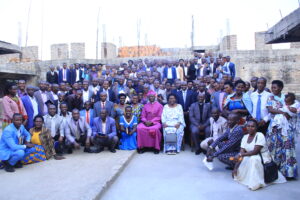
The call was made on Wednesday during the monthly clergy fellowship held at the Consecration Site of Emmanuel Cathedral, Kinyasano.
Speaking on the theme “The Clergy and Church Ministry,” Rev. Canon Dr. Patrick Mbaasa highlighted the relationship between clergy and church ministry, emphasizing the uniqueness of the clerical calling.
Rev. Canon Dr. Mbaasa explained that clergy are people who are called, trained, ordained, and sent. He urged the clergy to always reflect on their divine calling alongside their ministerial formation and ordination. He reminded them that the Church exists both as a universal and a local institution.He further explained that the Church is both militant and triumphant. The militant Church, he said, is the visible Church on earth where believers serve, while the triumphant Church is invisible and will be joined after completing the earthly journey.

“As clergy, we are called to be ministers in the Church and not mere workers,” he said. He also clarified the categories of Christians within the Church: the lost, nominal, and practicing Christians.
Rev. Canon Dr. Mbaasa noted that although there are many ministries within the Church, the ministry of the clergy is unique. As ordained ministers, clergy have a name to protect and should therefore be mindful of their behavior and character. He stressed that their major role is to draw people closer to Jesus Christ.
He reminded the clergy that the Church is not the Kingdom of God but is subject to it and will be judged. Quoting St. Augustine, he said, “The Church is a communion of saints and sinners.”

He observed that many people in the Church are spiritually thirsty, reminding clergy that they are facilitators in ministry. While some believers seek miracles, he cautioned that miracles should never be used as a bribe.
For the militant Church to thrive, Rev. Canon Dr. Mbaasa emphasized the importance of teamwork involving both clergy and the people they serve. He reminded clergy that as team leaders, they bear greater responsibility and accountability. He urged them to maintain a supervisory role and avoid interfering with those serving under them, instead allowing them to fully utilize their gifts and talents in areas such as prayer, healing, and deliverance.
He cautioned that conflicts may arise in ministry but urged clergy not to “devour one another,” quoting Galatians 5:15. He advised that conflicts should be addressed early to prevent escalation, noting that what unites Christians is greater than what divides them.
“We are Christians, we are clergy, and we are born again,” he said. He added, “Weak people revenge, strong people forgive, and intelligent people ignore.”


Rev. Canon Dr. Mbaasa emphasized that team building requires commitment, selfless service, and limited personal interests. He urged clergy to attract and retain Christians in their ministries by employing strategies that meet people’s needs, while remembering that the central need is spiritual.
He challenged the clergy by asking whether they truly meet the needs of the people they lead and serve.
He further cautioned clergy to be vigilant in their conduct, advising them to avoid demeaning people, comparing themselves with others, or being complacent. He encouraged them to pursue continuous growth, noting that slow progress is better than no progress.
Quoting Dr. Martin Luther King Jr., he said, “If you cannot fly, then run; if you cannot run, then walk; if you cannot walk, then crawl. But whatever you do, you have to keep moving forward.” He urged the clergy to remain positive and never give up.
In his remarks, the Bishop of North Kigezi Diocese, Rt. Rev. Onesimus Asiimwe, expressed gratitude to Rev. Canon Dr. Patrick Mbaasa for sharing his insights with the clergy. He also commended the clergy for their commitment to ministry and for attending the fellowship.